

By Arpan Bohra & Co., Chartered Accountants, Hyderabad. Position of law as at 29 November 2026. General information, not advice for a specific case.
A GCC receives a transfer pricing notice for an earlier year. The officer’s view: this is not a low-risk back office. It makes real decisions, so a 15% markup is too low. The GCC’s finance head sees the same markup that went through unquestioned two years ago. Welcome to the most common GCC transfer pricing audit: not a dispute about arithmetic, but about what the GCC actually is.
Which law applies: assessments for FY 2025-26 and earlier are governed by the Income-tax Act, 1961. Income from 1 April 2026 falls under the Income-tax Act, 2025. The routes below exist in both, and section numbers differ.
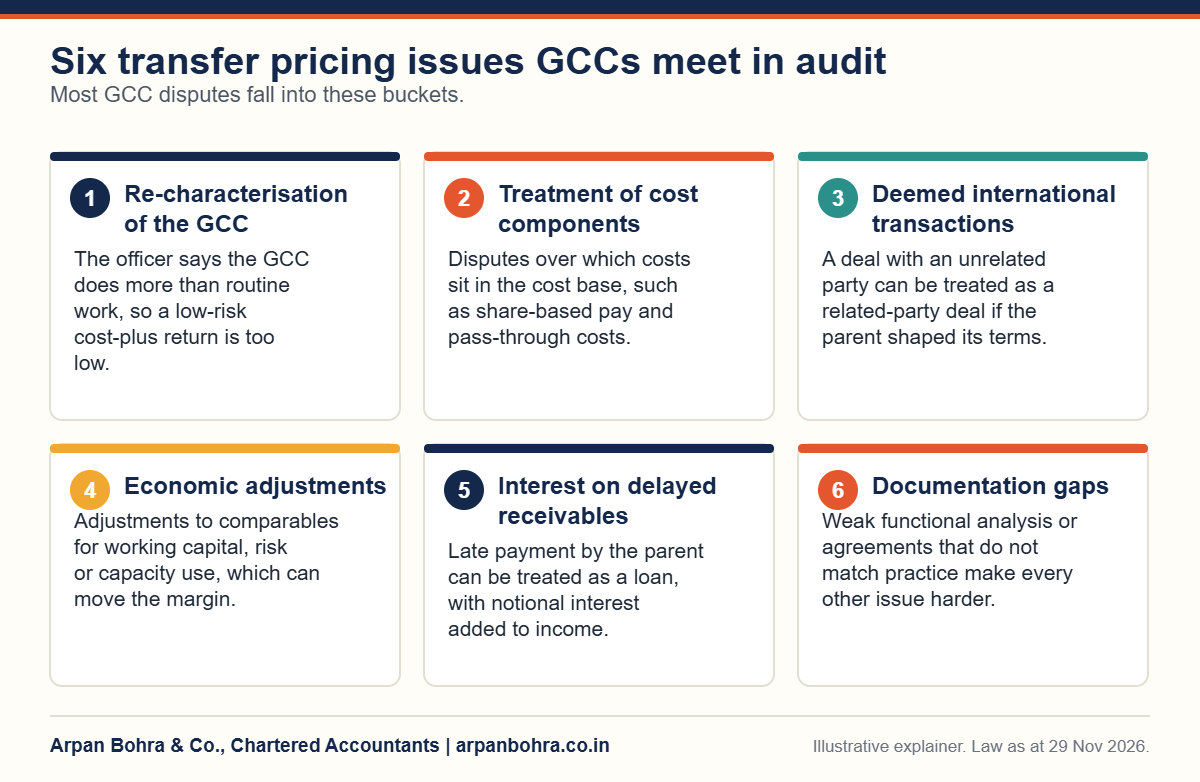
The six recurring issues
1. Re-characterisation
The tax officer argues that the GCC performs higher-value functions than its documents say. If the GCC takes decisions, owns intangible assets or manages other group entities, a cost-plus return on routine work may be too low. This is why the written functional analysis and the real roles of senior staff must agree.
2. Cost components
The margin is calculated on a cost base. Whether certain items belong in it is often disputed.
3. Deemed international transactions
A transaction between the GCC and an unrelated party can be treated as a transaction with a related party if the parent has influenced its terms through a prior agreement. Vendor arrangements negotiated at group level are a common example.
4. Economic adjustments
Both sides adjust comparables for differences such as working capital, risk and capacity use. The choice of adjustment can move the benchmark margin noticeably, so the method needs a clear rationale.
5. Interest on delayed receivables
A written credit-period policy, and consistent payment practice, reduce this exposure.
6. Documentation gaps
Weak contracts, missing approvals and outdated functional analyses make every other issue harder to defend. This is the cheapest issue to fix.
Routes to resolve or prevent a dispute
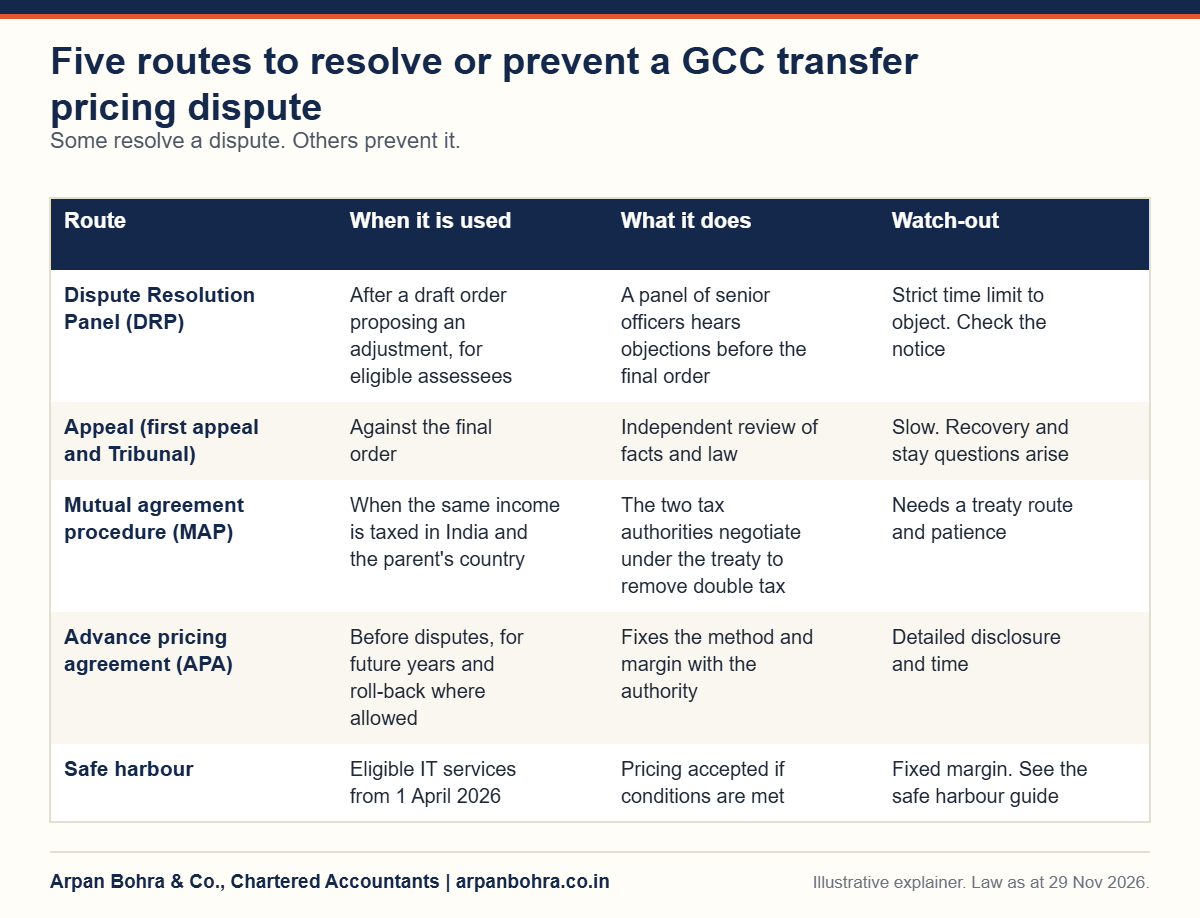
- Dispute Resolution Panel: when the officer proposes an adjustment in a draft order, an eligible taxpayer can object before a panel of senior officers instead of waiting for a final order. The time limit is strict.
- Appeal: against the final order, to the first appellate authority and then the Appellate Tribunal.
- Mutual agreement procedure: if India’s adjustment results in double taxation, the treaty route lets the authorities of the two countries negotiate. It needs the parent’s country to engage.
- APA and safe harbour: prevention rather than cure. See transfer pricing for GCCs: the 15.5% safe harbour.
Be audit-ready every year
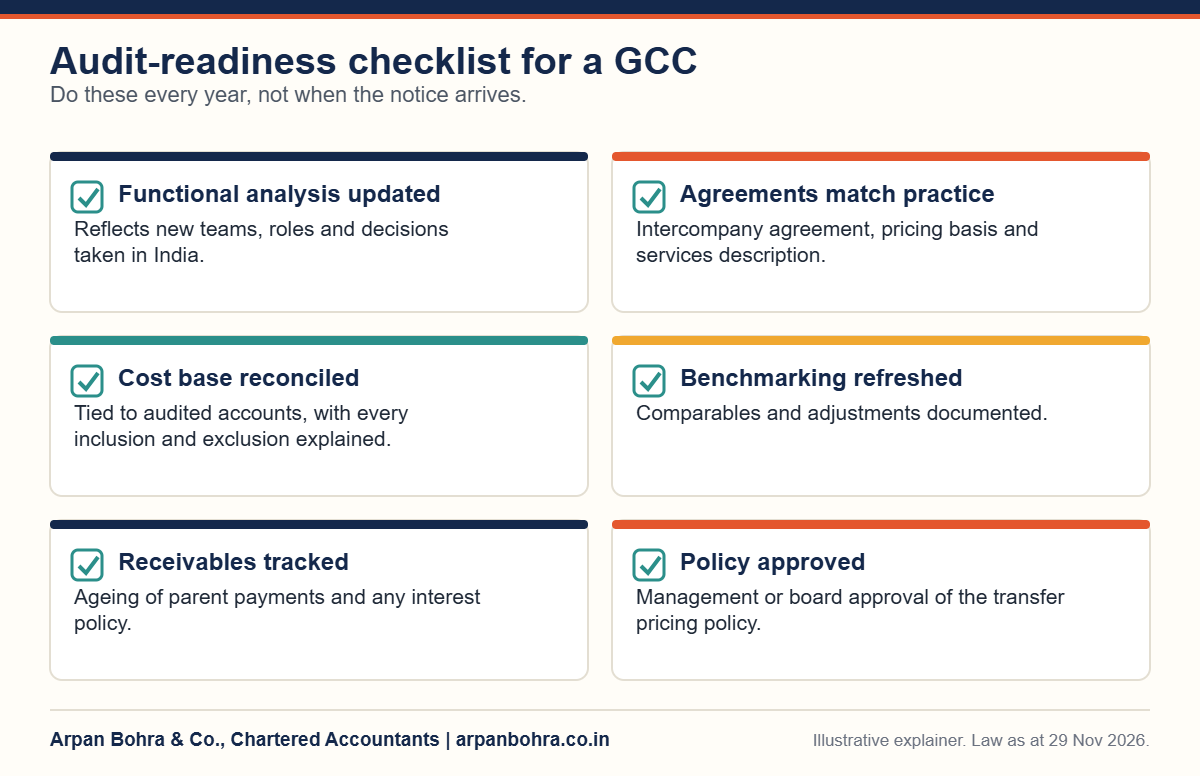
- Missing the time limit to object to a draft order.
- Describing the GCC as routine in documents while senior roles make strategic decisions.
- Copying last year’s benchmarking without a refresh.
- Letting parent payments run late with no policy.
Frequently asked questions
What is the most common GCC transfer pricing dispute?
Whether the GCC is truly a low-risk service provider. The answer decides whether a cost-plus return is appropriate.
Can the safe harbour avoid audit adjustments?
For eligible IT services from 1 April 2026, if the conditions are met and the option is validly made, the pricing is accepted without a benchmarking dispute on the margin.
What is a Dispute Resolution Panel?
A panel of senior tax officers that hears objections to a draft assessment order for eligible taxpayers, before the final order.
What if India and the parent’s country both tax the same income?
The mutual agreement procedure under the tax treaty can be used to seek relief from double taxation.
Which law governs older years?
The Income-tax Act, 1961, for FY 2025-26 and earlier years.
Takeaway. Transfer pricing audits are won on facts and paperwork long before the notice arrives. A GCC that keeps its functional story, cost base and agreements aligned has already done most of the work.
Arpan Bohra & Co., Chartered Accountants, Hyderabad. Website: https://www.arpanbohra.co.in/ | Email: ab@arpanbohra.co.in. For general information only. Tax law changes frequently and outcomes depend on facts, so consult a qualified professional before acting.
This article is for general information and is not professional advice. Law and rates change; please consult us before you act.